

Import-substitution : The Government shifts into high gear
Dernière mise à jours il y'a 11 moisThis follows the signing of contractual documents between certain operational public structures and the State, represented by the Ministry of Economy, Planning, and Regional Development during a ceremony was presided over on August 14, 2025, in Yaounde by Minister Alamine Ousmane Mey, in the presence of the Minister of Livestock, Fisheries, and Animal Industries, and the Minister of Agriculture and Rural Development
Lire aussi : Finances Publiques : Le Cameroun de nouveau sur le marché de l'emprunt
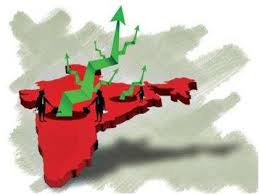
In total, seven structures have officially signed contractual documents with the state to boost the import substitution policy for the 2025 financial year. Specifically, this involves signing a collaboration agreement with the Cameroonian SME Bank and performance contracts with UNVDA, IRAD, Office Céréalier, SODEPA, and the VIVA-Logone and VIVA-Bénoué projects. Funds totaling 13.55 billion FCFA have been allocated following the signing of these documents. The signing of these documents marks a decisive step towards achieving the objectives of the PIISAH. It comes at a time when the country's trade balance situation has significantly improved, thanks to the efforts of the public authorities. According to the Report on the Cameroonian Economy for the year 2024, the trade balance deficit has remarkably decreased, from nearly 600 billion FCFA in 2023 to just over 250 billion FCFA in 2024. The government intends to maintain and strengthen this dynamic through the signing of contractual documents with certain operational public structures. The Integrated Agropastoral and Fisheries Import Substitution Plan (PIISAH), covering the period 2024-2026, is positioned as a lever for the structural transformation of the national economy. It aims to make a significant contribution to improving the country's trade balance by substituting imported products with local production, targeting products such as rice, fish, wheat, corn, palm oil, milk, etc. This will enable Cameroon to boost its production, reduce its trade deficit, save precious foreign exchange, strengthen its food sovereignty, create thousands of jobs for its youth, and enhance its integration into value chains.Regarding Axis 1, Securing and developing hydro-agricultural and fisheries perimeters," 200,000 hectares of land have already been secured out of the 400,000 planned in the Central Plain for the production of rice, corn, sorghum, and soybeans. Additionally, 2.3 million hectares of hydro-agricultural perimeters have been developed in certain regions. Furthermore, 21 water retention dams have been built for agropastoral activities. Moreover, 846 km of roads have been developed to access production basins and supply them with improved electric power.As for Axis 2, improving production, transformation, and marketing," there has been a production of 600,000 tons of rice seeds, 13,000 tons of planifiable flour, nearly 600,000 tons of seeds, and the provision of nearly 2.5 million tons of fertilizers. The construction of 21 artificial insemination centers is also underwayRegarding Axis 3, Improving access to research, training, and financing," about 50 SMEs have been supported in aligning their products with standards. A refinancing facility for microcredit institutions has been set up to develop value chains in livestock and aquaculture. Thirty promoters have been trained on labeling and packaging products "Made in Cameroon."
Ck

JESSICA CHRISTELLE KOAMBI
Commentaire(s) du post
Articles similaires
 bernardo2


Floyd Miles
Actually, now that I try out the links on my message, above, none of them take me to the secure site. Only my shortcut on my desktop, which I created years ago.