


Civil Engineering : Maintenance of the Kribi Road Shifts into Offensive Mode
Dernière mise à jours il y'a 9 moisThe logistical agony of the Edéa–Kribi corridor has just forced a paradigm shift at the highest levels of the State. Faced with the critical dilapidation of National Road No. 7, the Ministry of Public Works (MINTP) enacted, on January 12, 2026, a direct intervention by the National Brigade for Works by Direct Labor (BNTR) to assist a struggling SOMAF company. This shift to an offensive mode is no longer an option but an absolute necessity to preserve the viability of the Kribi Deep Sea Port. By deploying its own units between kilometer points 12 and 14, the government is attempting to break the spiral of inefficiency on an axis where every pothole transforms into a bottleneck for sub-regional trade.
Lire aussi : Urban Governance : The Urban’Her Initiative Consecrates Female Leadership
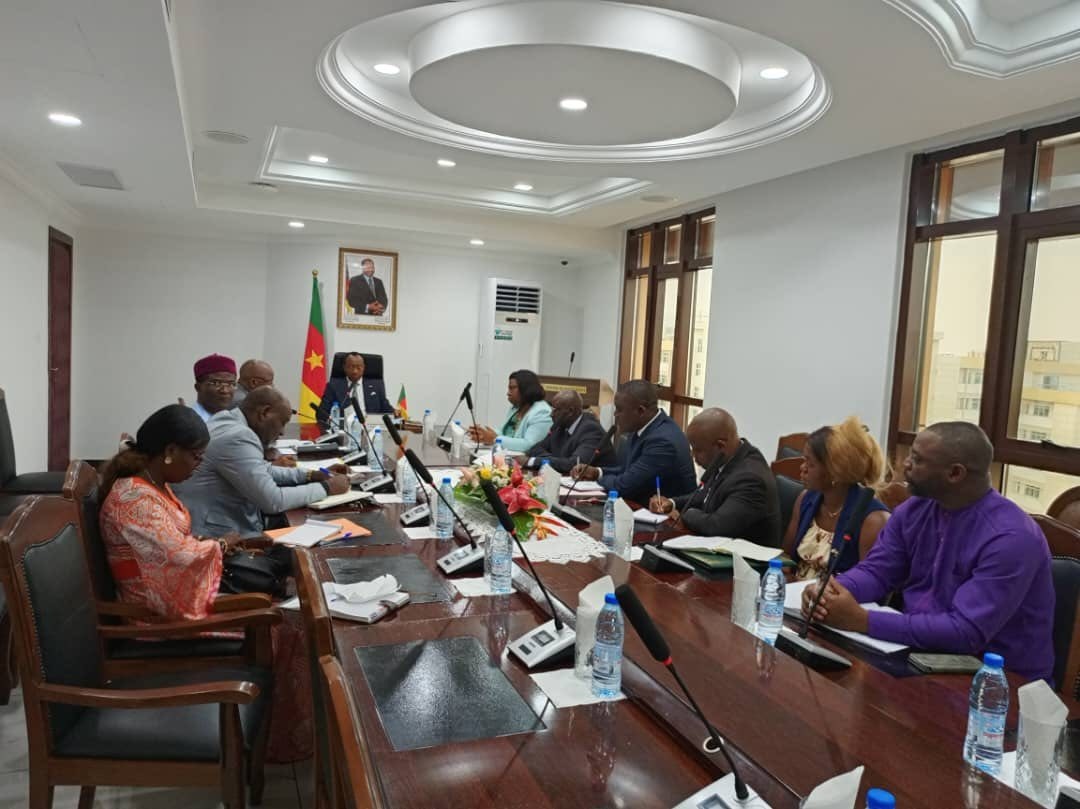
The reality on the ground masks a financial crisis that has paralyzed contractual execution for several months. At the heart of this matter, a massive debt of 2.128 billion FCFA in unpaid bills—split between the Road Fund and the Public Investment Budget—is literally suffocating the private contractor. This debt, accumulated through unsettled progress reports, largely explains SOMAF's delays on the Bivouba Bridge–Kribi section. By mobilizing the BNTR, the MINTP is attempting to bypass this budgetary obstacle through sovereign action, utilizing specialized equipment to treat the most pronounced rupture zones. This is a rescue operation aimed at restoring a minimal level of driving comfort, pending the realization of the vast 148 billion FCFA rehabilitation program supported by the African Development Bank.
The priority is now to secure the transit of heavy-duty vehicles, whose tonnage regularly exceeds regulatory thresholds, accelerating pavement wear. The reinforcement of temporary signage and the optimization of material flows are merely symptoms of a crisis management effort seeking to avoid the final formal notice of default for the private operator. In this context of extreme tension, the 2026 direct labor intervention appears as a barometer of the resilience of national infrastructure. For economic actors, this administrative surge must imperatively be accompanied by a settlement of construction industry arrears; otherwise, even the elite force of the national brigade will be unable to prevent the crumbling of a road network vital to the country's industrial sovereignty.
CK

bernardo carlos ndjomo
Commentaire(s) du post







Floyd Miles
Actually, now that I try out the links on my message, above, none of them take me to the secure site. Only my shortcut on my desktop, which I created years ago.